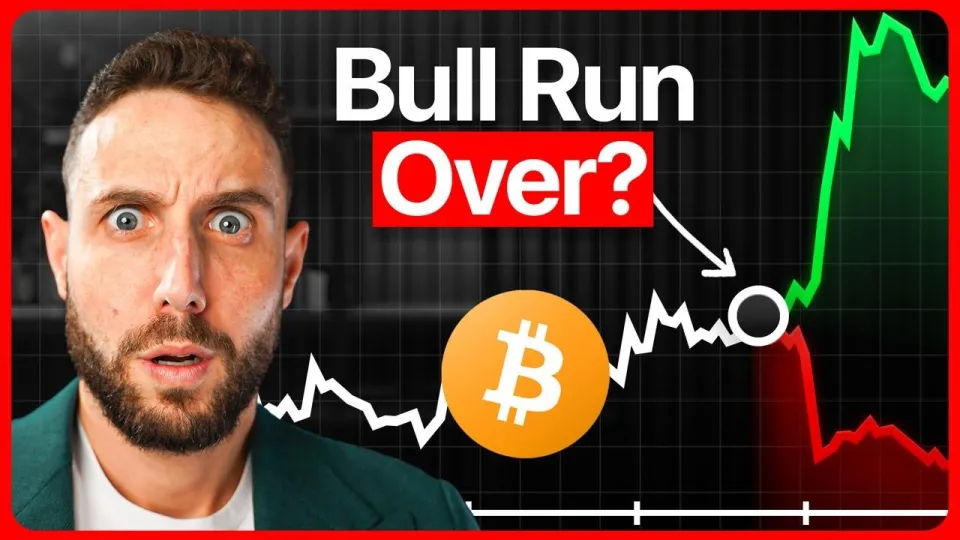
Does Bitcoin Have Two Days to Save the Crypto Bull Run?
You can order the same kind of articles for your own video to boost it on YouTube and Google. Just message the Telegram bot @sat_sit_bot. It writes articles around your video, embeds the video and publishes them on popular niche websites (no ads). Try it free: 50 articles on us.
· based on the channel EllioTrades
Bitcoin has roughly two days to hold its weekly support and keep the crypto bull run alive. If BTC closes the week above the prior weekly low and reclaims the range, the uptrend structure stays valid and altcoins become buyable on the bounce; a weekly close below it flips the setup into a deeper retrace toward lower support, and the next leg higher gets weaker. Traders positioning around that decision can hedge or express a view on the outcome through Kalshi's crypto markets, where the event itself is the trade rather than the coin.
What the two-day deadline actually means for bitcoin
The deadline is not a news event but a candle: the weekly close is the only confirmation that matters. Intraday wicks below support are noise until the weekly candle prints, which is why the next 48 hours carry more weight than any single headline. Bitcoin's weekly structure has been built on higher lows, and the current retrace is testing the most recent one. A close above that level keeps the sequence of higher lows intact; a close below breaks it and turns the prior support into resistance.
Practically, that gives three scenarios:
- Weekly close above support, price reclaims the range. The bull run stays valid, the retrace is logged as a normal pullback, and risk can be added on the following daily close.
- Weekly close below support but a fast reclaim within days. This is the messy middle: a fake breakdown that traps late shorts but still damages momentum and delays the next leg.
- Weekly close below support with no reclaim. The retrace extends, and the market starts pricing a much deeper correction before any new highs.
The key point is that the deadline is binary in structure but not in outcome. Even a hold does not guarantee an immediate rally; it guarantees that the trend framework survives another week.
Bitcoin price levels that decide the bull case
Support is the level that has already produced a reaction, and Bitcoin's current weekly support is the line between a pullback and a trend change. Above it, the market is still in an uptrend; below it, the burden of proof shifts to the bulls. On the downside, the 97K area is the first major shelf that bears point to, and beneath that the market opens into a much wider 50K–100K range where price has historically spent time consolidating. That range is not a forecast, it is the map of where liquidity sits if support fails.
On the upside, the first confirmation is a reclaim of the broken range high, followed by acceptance above it for more than a day. A single wick through resistance is not confirmation; two consecutive daily closes above it are a much better signal. Traders watching bitcoin price levels should treat the weekly close as the gate and the daily closes as the entry trigger.
Why altcoins are a second-leg trade, not a first move
Altcoins are bought after Bitcoin confirms, not while it is still deciding. When BTC sits on weekly support, altcoin charts are leveraged beta on the same outcome: they fall harder if support breaks and bounce faster if it holds. That is why the sensible sequence is to wait for the BTC weekly close, then rotate into the strongest altcoin setups rather than pre-positioning into a coin that will simply follow Bitcoin lower.
The rotation checklist after a confirmed hold:
- Bitcoin reclaims the range and holds it for at least one daily close.
- BTC dominance stops rising and begins to flatten or roll over.
- Altcoin pairs (ALT/BTC) print higher lows rather than lower highs.
- Volume expands on the breakout, not just on the initial wick.
If those four conditions are not met, the altcoin trade is a guess about Bitcoin's candle, not a trade with an edge.
What traders are arguing about right now
The most common disagreement is about what a shallow bear market does to the next bull leg. A short, sharp retrace that barely damages sentiment tends to produce a weaker continuation, because the market never fully resets positioning; a deeper flush clears leverage and gives the next rally a stronger base. That is the trade-off behind wanting cheaper entries: buying lower feels better, but it also means the bull case took real damage.
A second argument is about who can actually move price over a weekend. With market makers thinner and liquidity reduced, weekend moves are often reversed on Monday, which is why some traders dismiss weekend breakdowns entirely. The counterpoint is that weekly candles close on weekends, so the thin session is exactly where a stop hunt can print the candle that matters.
A third concern is single-name risk outside crypto: index providers reviewing whether digital-asset treasury companies such as MSTR stay in global indexes. A delisting decision would hit the equity proxy for BTC and feed back into crypto sentiment, independent of the weekly candle.
How to trade the weekly close without guessing
The plan is to define the invalidation first and size the position second. If the thesis is that support holds, the stop belongs below the weekly low that defines the setup, and the position size is whatever keeps that stop at a tolerable loss. If the thesis is that support breaks, the trade is expressed on the break with a stop back above the reclaimed level, not on hope that the level fails.
A simple three-step routine for the next 48 hours:
- Mark the weekly support level and the prior weekly close on the chart.
- Write down both scenarios and the exact price that invalidates each one.
- Do nothing until the weekly candle closes; then execute the scenario that printed.
This removes the most expensive habit in crypto trading: changing the thesis every four hours because a wick moved.
Tools and links mentioned in the breakdown
- Kalshi event markets — trade the outcome of specific events, including crypto price and policy questions.
- Liquid — derivatives trading with a 10% fee discount through the referral link.
- WEEX bonus page — deposit $100 and unlock up to $4,000 in bonuses.
- fomo — follow the public trading journey and portfolio moves.
- EllioTrades on X — chart updates and trade ideas between videos.
The bottom line on bitcoin's two-day window
Bitcoin's bull run survives or breaks on the weekly close, not on intraday noise. Holding the weekly support keeps the higher-low structure intact and makes altcoins a legitimate second-leg buy; losing it shifts the conversation to the 97K shelf and the wider 50K–100K range. The depth of this retrace also shapes the strength of the next leg, which is why a shallow reset is a mixed blessing rather than a clean win. EllioTrades lays out the levels and the buy list in the video breakdown, and the same event can be traded directly through Kalshi if you would rather position on the outcome than on the coin.
Key takeaways
- The weekly candle close is the deciding event: holding the prior weekly support keeps the crypto bull run intact, losing it opens a deeper retrace.
- A break below the range puts the 97K area and then the 50K–100K broader range in play, per bearish viewers watching the same chart.
- Altcoins are a second-leg trade: they only get bought after Bitcoin confirms support, not before.
- A short bear market historically weakens the next bull leg, so the depth of this retrace matters for the whole cycle.
- MSTR index inclusion risk is a separate catalyst traders are tracking alongside the BTC weekly close.
Source: Bitcoin Has 2 DAYS to Save the Crypto Bull Run · Markdown version
Questions & answers
What happens to bitcoin if the weekly close is below support?
The higher-low structure breaks and the prior support becomes resistance. Attention shifts to the 97K area first, and below that the market opens into a much wider 50K–100K range where price has consolidated before. A fast reclaim within a few days can still repair the chart, but momentum and timing both suffer.
Should I buy altcoins before bitcoin confirms support?
No. Altcoins behave as leveraged beta on bitcoin while BTC is still deciding at weekly support, so they fall harder if the level breaks. The cleaner sequence is to wait for the weekly close, then rotate only if BTC reclaims the range, dominance flattens and ALT/BTC pairs print higher lows.
Does a short bear market make the next bull run weaker?
It can. A shallow retrace that never clears leverage and excess positioning tends to produce a weaker continuation, while a deeper flush resets the market and gives the next rally a stronger base. That is the trade-off between wanting cheaper entries and wanting the bull case confirmed.
Can a weekend move really decide the trend?
It can, because the weekly candle closes on the weekend even though liquidity is thinner and market makers are less active. Weekend breakdowns are often reversed on Monday, but a stop hunt in a thin session is exactly how the weekly candle that defines the setup gets printed.